 Scanner Radio
/
Blog
Scanner Radio
/
Blog
Every piece of scanner audio starts with a phone call. When someone dials 911, the call routes to a Public Safety Answering Point, or PSAP, which is the technical term for a 911 dispatch center. There are more than 6,000 PSAPs operating across the United States, ranging from large county-level communications centers staffed around the clock to small township operations that handle just a few calls per shift. The dispatcher who answers your call gathers the location, the nature of the emergency, and any details that will help responders once they're on scene.
That information doesn't stay on the phone line. Within seconds, it moves to the radio.
Most PSAPs operate separate radio channels for police, fire, and EMS. A dispatcher broadcasts the call details over the appropriate channel, and every officer, firefighter, or paramedic monitoring that channel hears the assignment simultaneously. From that point forward, all the coordination between responders and dispatch, unit locations, arrival times, scene conditions, requests for backup, plays out over the radio in real time.
This is what scanner listeners are tuned into. The radio traffic isn't a summary or a report filed after the fact. It's the live operational conversation between dispatchers and the responders in the field, unfolding as the incident develops. That's why scanner audio so reliably beats traditional news coverage on breaking incidents: the information exists on the radio the moment it exists at all.
One thing that surprises new scanner listeners is how many separate radio channels are in use during a single major incident. A structure fire might involve separate channels for fire suppression, EMS on scene, incident command, and mutual aid from neighboring departments. A police pursuit might cross jurisdictions and jump to a tactical channel. Large metro areas can have dozens of active dispatch channels running at any given moment.
Modern dispatch systems have moved from the old analog frequencies many listeners remember toward digital trunked radio networks, where conversations are dynamically assigned to available frequencies within a larger system. The underlying logic is the same: dispatchers talk to responders, and that traffic is what Scanner Radio streams from over 7,000 feeds across the U.S. and Canada.
Most routine dispatch traffic is publicly accessible. Knowing that a patrol car is en route to a residential alarm or that a fire unit is responding to a reported kitchen fire poses no risk to anyone, and this kind of traffic makes up the majority of what scanner listeners hear. Some agencies have moved portions of their communications to encrypted channels, particularly for tactical operations or sensitive investigations, so not every transmission is audible. But the bulk of day-to-day emergency response, dispatched calls, unit acknowledgments, on-scene updates, remains on open channels.
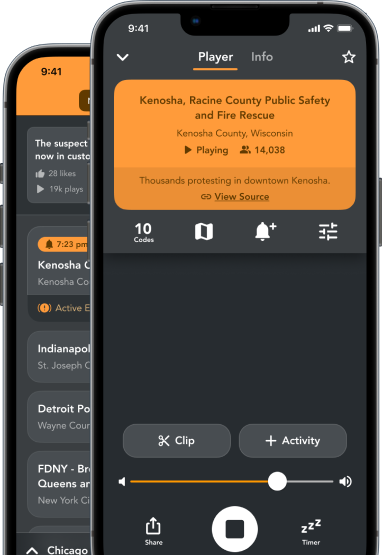
The listener community that has built up around scanner audio reflects this. When a major incident draws a lot of activity on a feed, listeners on Scanner Radio tag what they're hearing in real time, flagging the incident type so other listeners know at a glance whether the surge in activity is a building fire, a pursuit, or a large-scale medical call. Those tags surface as headlines alongside the audio, giving context without requiring someone to already know dispatch shorthand.


The chain from a 911 call to the radio traffic a listener can hear takes only seconds. That speed is built into how the system is designed, and it's why scanner listeners have always been among the first people outside the response to know what's happening.