 Scanner Radio
/
Blog
Scanner Radio
/
Blog
Watch any major incident unfold and you'll notice the same pattern: by the time it hits CNN, local TV, or even your X feed, the story has already been playing out on police scanners for hours. Active scenes, manhunts, plane diversions, factory fires, school lockdowns. It all hits the radio first.
Traditional newsrooms still need reporters to confirm, editors to approve, and producers to push it live. Police, fire, and EMS dispatchers don't wait for any of that. They start talking the second a 911 call comes in, and that traffic is public.
For most of their history, scanners meant bulky hardware on a newsroom desk, in a dispatcher's office, or in a hobbyist's basement. That's no longer the case. More than 7,000 live police, fire, EMS, and emergency management feeds from across the U.S. and Canada now stream to free phone apps like Scanner Radio, meaning anyone with a phone can listen to the same radio traffic newsrooms have been monitoring for decades.
Reporters have always known this. Most newsroom desks still keep a scanner running in the background. The difference today is that the same access is available to anyone curious enough to tap into a feed.
When something big happens, like a chase across two counties, a refinery explosion, or a swatting call at a school, the dispatchers, the units rolling, and the on-scene reports are already on the air while the rest of the country is still scrolling past it.
The fastest signal that something big is unfolding isn't a press conference. It's a sudden surge of scanner listeners. When a normally quiet county feed jumps from a few dozen listeners to tens of thousands in minutes, something is happening. Reporters in that city are listening. Locals are listening. And the rest of the news cycle is about to catch up.
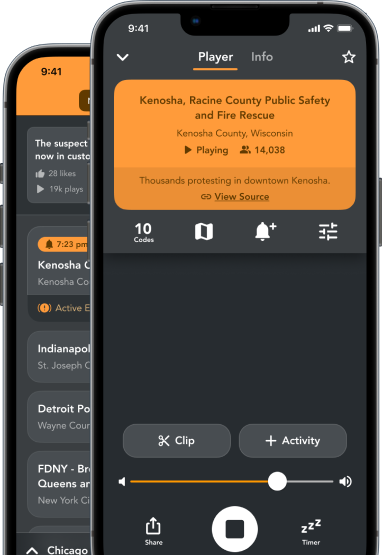
Scanner Radio surfaces this in real time with its Top Scanners list and sends push notifications when a feed spikes, so your phone can flag the moment the country's attention shifts to a specific scene.
Scanner Radio also lets listeners in the community tag what's happening on a feed in real time. As something unfolds, people tuned in mark the type of incident: a building fire, an officer-involved shooting, a protest and more. In addition, real-time headlines are surfaced alongside the audio, so anyone listening can see exactly what's happening, without having to piece it together from the radio traffic alone.
On a typical breaking story, the radio carries the original 911 call summary, the units assigned, on-scene officer reports, suspect descriptions, and the size of the response, all before traditional news outlets even publish an article. For fast-moving incidents like pursuits, evacuations, or active scenes, that gap between scanner and headline can be one to three hours, sometimes longer in smaller markets.
Setup is a breeze. Download Scanner Radio on your phone and turn on breaking news alerts. The next time something major breaks, you'll be the first to hear about major news in the country and in your location.


New to scanner traffic? Our guide to police scanner codes breaks down the most common terms you'll hear on a feed.
Most big stories will keep breaking the same way: on the radio first, on the news second. Listening in used to require expensive hardware and a steep learning curve. Now it just takes a phone.