 Scanner Radio
/
Blog
Scanner Radio
/
Blog
Local television is still one of the most trusted sources during a regional disaster. Your local affiliates will interrupt regular programming, bring in meteorologists, and often send crews into the field to report from affected areas. For people who want a curated, verified stream of information with on-screen graphics showing storm tracks and evacuation zones, local TV delivers.
The limitation: TV coverage lags behind what's actually happening on the ground. Reporters have to get to a location, producers have to cut to them, and stations have to balance coverage across an entire region. You're also dependent on power, and in a serious storm, that's not guaranteed.
Apps like the National Weather Service app, Weather.com, and your phone's built-in weather alerts are essential for tracking the storm itself, including where it's headed, how strong it is, and when it's expected to hit your area. Wireless Emergency Alerts (the loud ones that override your phone's silent mode) are broadcast directly by FEMA and will reach you even if you haven't downloaded anything.
The limitation: These tools are great for the weather event itself, but they don't tell you what's happening on the ground in response to it. They can tell you a tornado touched down. They can't tell you which roads are blocked, where rescues are happening, or which shelter is at capacity.
During major disasters, social media (especially X/Twitter) becomes a fast-moving stream of firsthand accounts, photos, videos, and on-the-ground reports. Local journalists, emergency management agencies, and ordinary people all post in real time. In some cases, viral posts have helped direct rescue resources to people who were stranded.
The limitation: Social media is noisy, unverified, and prone to rumors spreading faster than corrections. During Hurricane Harvey, misinformation about which shelters were open caused real problems. It's a useful supplement, but not a primary source for life-safety decisions.
NOAA Weather Radio is a nationwide network of radio stations broadcasting continuous weather updates directly from the National Weather Service, 24 hours a day. During severe weather, it's one of the most reliable sources of official information. It doesn't depend on a news crew, a social media algorithm, or a cell tower staying up.
Dedicated NOAA weather radios are inexpensive and battery-powered, making them a classic emergency preparedness item. Many scanner apps, including Scanner Radio, carry NOAA weather radio feeds so you can access them without separate hardware.
All of the sources above tell you what's happening. Scanner Radio tells you what first responders are doing about it.
When fire crews are on the scene of a structure fire, they're on the radio. When a search and rescue team is coordinating a flood evacuation, they're on the radio. When emergency management is routing resources to the hardest-hit neighborhoods, they're on the radio. That traffic is live, direct, and unfiltered, and in most parts of the country, it's publicly accessible.
This is why Scanner Radio has long been the go-to tool for journalists covering breaking news and emergency management professionals monitoring a developing situation. You're not waiting for someone to decide it's newsworthy. You're hearing the actual response as it unfolds.
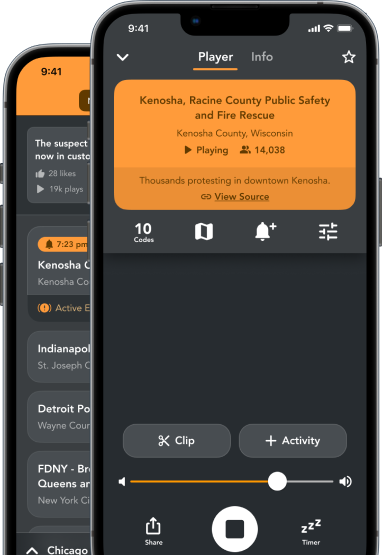
Scanner Radio makes this accessible to anyone with a smartphone. It aggregates live audio feeds from thousands of fire, EMS, police, and weather agencies nationwide, all in one free app. A standout feature during emergencies is the listener spike alert: when a feed sees a sudden surge in listeners, the app notifies you, which is often the first signal that something major is happening, sometimes before any news alert goes out.


No single source gives you the complete picture. Here's how they complement each other during a major event:
The people who navigate disasters best are the ones who aren't dependent on a single source.